
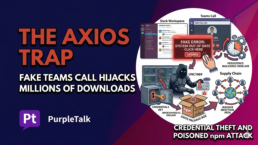
The Axios Trap: How a Fake Meeting Hijacked Millions of Downloads
Crafting the Perfect Illusion
The developer who maintains Axios, Jason Saayman, recently revealed the terrifying details of how he was tricked. The attackers, known to security experts as a North Korean hacking group named UNC1069, did not try to hack his passwords directly. Instead, they played a psychological game. They pretended to be a well-known tech founder and reached out to Saayman with a personalized pitch.
To make the scam believable, the hackers built a completely fake, incredibly detailed Slack workspace. They copied the real company’s logos, colors, and branding perfectly. They even created fake chat channels filled with everyday business conversations and shared links to real LinkedIn posts to make the space feel active and alive. The developer felt totally comfortable interacting in this environment because the hackers had put so much effort into making it look like a normal, bustling company network.
The Fake Update that Ruined Everything
The trap was finally sprung when the hackers invited Saayman to a standard Microsoft Teams video call. Just seconds after he joined the meeting, a highly convincing error message popped up on his screen. The message warned him that something on his computer was out of date and needed an immediate fix to continue the call. Believing it was just a normal software glitch, he clicked the prompt to install the required update.
That single click was all the hackers needed. Instead of updating his system, the prompt secretly installed a hidden backdoor program onto his computer. This malicious software immediately started digging through his machine, stealing the highly sensitive passwords and digital keys he uses to manage the Axios project. With those stolen keys in hand, the hackers quietly released two poisoned updates for Axios directly to the public.
Silent Stealers and Stolen Secrets
Security experts have been tracking this specific hacking trick for a while, often calling it a “GhostCall” attack. The moment a victim clicks that fake video call error, the hackers drop extremely aggressive spy software onto the computer. This software is specifically designed to hunt down and steal passwords saved in web browsers, password managers, and developer tools.
In the past, these specific North Korean hackers mostly used this trick to steal money from cryptocurrency investors and venture capitalists. However, security researchers are now sounding a massive alarm because the hackers have changed their targets. Going after the developers who maintain free, foundational internet software is a massive escalation. By taking over an open-source account, the hackers can infect thousands of victims at once instead of trying to trick people one by one.
Cleaning Up a Massive Mess
The fallout from an attack like this is hard to overstate. Axios is downloaded nearly one hundred million times every single week. It is a fundamental building block used by developers all over the world to make websites and apps talk to each other. When a package this popular gets poisoned, the bad code spreads like a virus, automatically downloading into other people’s projects and creating a massive, terrifying supply chain attack.
To stop the bleeding and secure the project, the Axios maintainer had to take extreme measures. He wiped his devices clean, reset every possible password, and completely locked down the process for publishing new updates. He added strict verification checks to ensure that no one can easily push new code without multiple layers of proof. While the immediate threat has been contained, this incident serves as a brutal wake-up call for the entire tech industry. It proves that even the most secure systems can be broken if you can just convince the right person to click the wrong button during a fake meeting.