
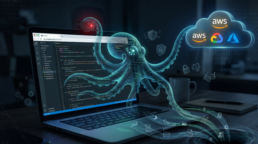
NEW PYTHON MALWARE STEALS CLOUD KEYS AND WATCHES YOUR EVERY MOVE
A dangerous new digital weapon has been uncovered by security experts, and it is designed to vanish into your computer while stripping away your most private information. This sneaky software, which researchers have named DEEP#DOOR, is a Python-based “backdoor” that gives hackers a permanent, secret entrance into a victim’s machine. Unlike common viruses that might slow down your computer or pop up annoying ads, this tool is built for long-term spying and the high-stakes theft of passwords for major cloud services like Amazon, Google, and Microsoft.
A Hidden Entry: How the Trap Is Set
The nightmare begins with a simple file that looks like a basic script. Most experts believe these files are sent out through standard phishing emails, disguised as something harmless like an invoice or a company update. Once a user is tricked into running the script, a chaotic chain of events starts behind the scenes. First, the script immediately goes to work breaking the computer’s locks. It turns off Windows security features and bypasses the systems meant to catch malicious code.
What makes this specific attack so clever is that the actual “brain” of the virus is hidden inside the very first file the victim opens. Instead of downloading the malware from a suspicious website—which might trigger an alarm—the script builds the virus right there on the hard drive. By creating the poison locally, the hackers avoid leaving a trail of breadcrumbs for security software to follow. This “fileless” approach makes it incredibly difficult for standard antivirus programs to realize that something is wrong until it is far too late.
The All-Seeing Eye: Total Control and Constant Surveillance
Once DEEP#DOOR is comfortable inside a system, it turns the infected computer into a tool for total surveillance. The hackers use a public tunneling service to send commands to the machine. This is a brilliant move because it allows the bad actors to hide their traffic among normal internet data. It’s like a spy using a public bus to travel to a secret meeting; they blend in perfectly with the crowd.
From their remote location, the hackers can see everything. They can log every single key you press, watch what you copy to your clipboard, and even take screenshots of your desktop. More disturbingly, the malware can turn on your webcam and record the audio in the room, effectively turning your laptop into a bugging device. The main goal, however, is the loot. The software is specifically tuned to hunt for saved passwords in browsers like Chrome and Firefox. It doesn’t stop at social media or bank logins; it goes after the “keys to the kingdom”—the credentials used to manage massive cloud business accounts on Azure, AWS, and Google Cloud.
A Virus That Refuses to Leave
One of the most frustrating things about DEEP#DOOR is its “watchdog” feature. Most viruses can be removed by deleting a single folder or stopping a certain task, but this one is much more stubborn. It embeds itself into several different parts of the Windows operating system, including the folders that run programs when you turn on your computer and the hidden “Registry” that controls how the system behaves.
If a user or a basic cleanup tool manages to delete one part of the virus, a separate hidden component detects the change and immediately rebuilds the deleted piece. It is a self-healing infection that makes it nearly impossible for an average user to clean their system manually. It even “stamps” its files with fake dates to make them look like old, legitimate system files, further tricking any human or machine trying to find it.
Why This Matters for the Future of Security
While researchers haven’t seen this being used in a massive, worldwide “spray and pray” campaign yet, the targeted nature of the tool is a major red flag. It suggests that the people behind it are looking for specific, high-value victims rather than just trying to infect as many people as possible. Because the code is modular, other hackers could easily take this framework and adapt it for their own purposes, making it a growing threat to businesses and individuals alike.
Security teams are now warning everyone to be extra cautious with email attachments and to ensure their systems are fully updated. In an age where our entire lives—and our businesses—are stored in the cloud, a tool like DEEP#DOOR is more than just a nuisance; it is a direct threat to our digital identities and our privacy. The era of the simple virus is over; we are now facing silent, self-repairing spies that live in our pockets and on our desks.