
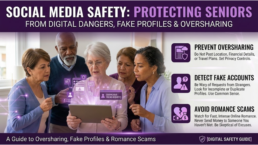
Social Media Safety: Protecting Seniors from Oversharing, Fake Accounts, and Romance Scams
The Appeal and Risks of Social Platforms for Seniors
Social media platforms like Facebook, Instagram, and WhatsApp offer wonderful opportunities for older adults to reconnect with long-lost friends, stay involved in family milestones, and share hobbies. However, as senior adoption of social networks continues to rise, cybercriminals increasingly view these platforms as fertile ground for exploitation. From mining personal profile details to executing elaborate relationship hoaxes, fraudsters use the open nature of social media to launch targeted digital attacks. Maintaining digital security requires a clear understanding of privacy boundaries and common online social scams.
The Hidden Danger of Digital Oversharing
One of the most frequent risks on social media is oversharing personal information. Seemingly harmless posts—such as vacation photos, updates about your routine, or answers to nostalgic social media quizzes—can expose critical security data. Scammers frequently gather details like your pet’s name, mother’s maiden name, high school, or birthday from public posts to answer password security questions or impersonate you online. Furthermore, posting about current trips tells criminals your home is unoccupied. Keeping your personal life private is a fundamental layer of defense.
Spotting Duplicate Profiles and Online Romance Fraud
Cybercriminals regularly utilize two sophisticated tactics on social networks: profile cloning and romance scams. Profile cloning occurs when a fraudster copies a real friend’s photos and name to create a duplicate account, then sends you a new friend request claiming their old account was lost. Once accepted, they message you asking for money or gift cards. Romance scams, or “catfishing,” involve build-up over weeks or months, where a stranger builds emotional rapport through flattering messages before fabricating a financial crisis. Never send money, gift cards, or cryptocurrency to anyone you have only met online.
Practical Privacy Steps for Safer Socializing
Navigating social media safely relies on adjusting your platform settings and exercising healthy caution. First, review your privacy settings to ensure your posts, friend lists, and personal details are visible only to “Friends” rather than the public. Second, decline friend requests from people you are already connected with until you verify directly with them outside social media. Finally, avoid clicking sponsored links or quizzes asking for personal details. Keeping your network limited to verified real-life connections keeps your social environment safe and enjoyable.