
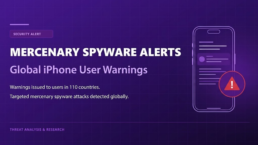
Apple Issues Mercenary Spyware Warnings to iPhone Users in 110 Countries
In a stark reminder of the sophisticated and pervasive nature of modern cyber threats, Apple has recently dispatched a fresh wave of urgent threat notifications to its customer base. This latest batch alerts iPhone users across 110 countries that they may be the targets of highly advanced mercenary spyware attacks. Since the inception of its threat notification program in late 2021, the Cupertino-based tech giant has reached out to individuals in over 150 countries. But what exactly does this mean for the affected users, and how does this sophisticated espionage machinery operate? This comprehensive article breaks down the nature of these attacks, the profile of typical targets, and the critical defensive measures recommended by Apple.
What is Mercenary Spyware?
Unlike generic malware designed for widespread financial gain, mercenary spyware represents the apex of digital surveillance technology. These attacks are characterized by their extreme cost, staggering sophistication, and highly targeted nature. Developed by private companies and often sold to state-sponsored actors or intelligence agencies, tools like NSO Group’s Pegasus or Intellexa’s Predator utilize zero-click exploits. This means the spyware can seamlessly compromise an iPhone without any interaction from the user, exploiting zero-day vulnerabilities in the operating system or default applications. Because of the immense resources required to develop and deploy these exploits, the attacks are inherently limited in scale.
Who is in the Crosshairs?
Consequently, Apple emphasizes that these mercenary spyware attacks are not aimed at the general public. Instead, individuals are singled out based on “who they are or what they do.” The typical targets include high-profile investigative journalists, human rights activists, politicians, dissidents, and diplomats. These individuals handle highly sensitive information that state actors or powerful organizations may wish to intercept. Apple notes that its threat notifications are “high-confidence alerts,” meaning the company possesses substantial evidence that the recipient’s Apple Account or specific devices have been actively targeted by these espionage campaigns.
How the Warning System Works
When Apple detects activity consistent with a mercenary spyware attack, it employs a multi-channel approach to notify the user. First, an unmistakable Apple Threat Notification alert appears prominently on the user’s iPhone Lock Screen and within the Settings menu. Second, an official email is sent from a specific Apple domain ([email protected]) to the addresses associated with the targeted Apple Account. Finally, a threat notification banner is displayed at the top of the user’s account page upon signing in at account.apple.com. Apple deliberately withholds the specific technical details or the geographic attribution of these attacks to prevent spyware vendors from adapting their techniques to evade future detection.
“The extreme cost, sophistication, and worldwide nature of mercenary spyware attacks make them some of the most advanced digital threats in existence today,” Apple stated, underlining the severity of the alerts.
Essential Protection Steps
For those who receive such a notification, or for any high-risk individual seeking to harden their digital defenses, immediate action is required. Apple strongly advises users to keep their devices updated with the latest iOS releases, which frequently contain patches for zero-day vulnerabilities exploited by spyware. Furthermore, users should secure their devices with a strong alphanumeric passcode, enable two-factor authentication (2FA) for their Apple account, and activate Stolen Device Protection.
The most potent defense mechanism offered by Apple is Lockdown Mode. Introduced specifically to combat mercenary spyware, this extreme, optional protection setting strictly limits device functionality, dramatically reducing the attack surface by disabling complex message attachments, restricting web browsing features, and blocking incoming invitations. While it makes the device less convenient to use, Lockdown Mode is an essential tool for those operating in the crosshairs of global cyber espionage.