The weaponization of AI Voice Cloning has transformed corporate and familial security overnight. When a high-stress call arrives—such as an urgent plea from a family member claiming to need immediate financial assistance for a medical or legal emergency—the instinctive reaction is to trust the unmistakable pitch and unique speech inflections on the line. Historically, that biometric familiarity was the ultimate proof of identity. Today, however, cybercriminals are actively exploiting that absolute certainty to bypass our logical defenses and execute devastatingly precise social engineering schemes against unsuspecting households.
This evolution marks a sophisticated shift in digital deception, where fraudsters have bypassed generic phishing emails in favor of targeted, high-stakes psychological manipulation. By leveraging advanced synthetic audio technology to replicate the exact timbre and cadence of specific individuals, malicious actors are successfully executing highly convincing impersonation campaigns. However, mitigating this risk does not require abandoning modern communication platforms altogether. Instead, safeguarding your household requires a clear understanding of how this synthetic threat operates, allowing you to establish a robust, systematic defense protocol to verify identity in real time.
The Tech Behind AI Voice Cloning
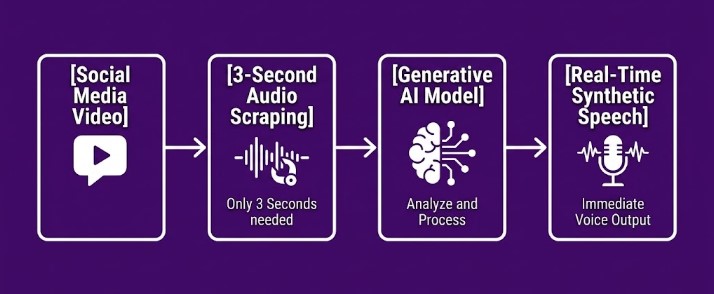
To effectively fight back against modern synthetic audio scams, we must first pull back the curtain on the technology that drives them. Years ago, creating a passable vocal replica required professional recording studios, expensive software, and hours of high-quality audio files. Now, advanced deep learning models can analyze a tiny audio fragment and generate a terrifyingly accurate vocal match in a matter of seconds.
How to Detect AI Voice Cloning and Deepfake Scams
These modern generative systems utilize neural networks that break human speech down into its most fundamental building blocks, mapping out acoustic characteristics like pitch, resonance, and cultural accents. Once the software understands these core parameters, it can instantly translate any typed text into a fully synthesized vocal output that mirrors the original speaker. Because these algorithms have become incredibly efficient, a malicious actor only needs a handful of seconds of clean audio to create a convincing replica.Consequently, a casual conversation posted online can easily become the raw material for an incredibly sophisticated impersonation attempt.
How Scammers Steal Your Voice from Social Media
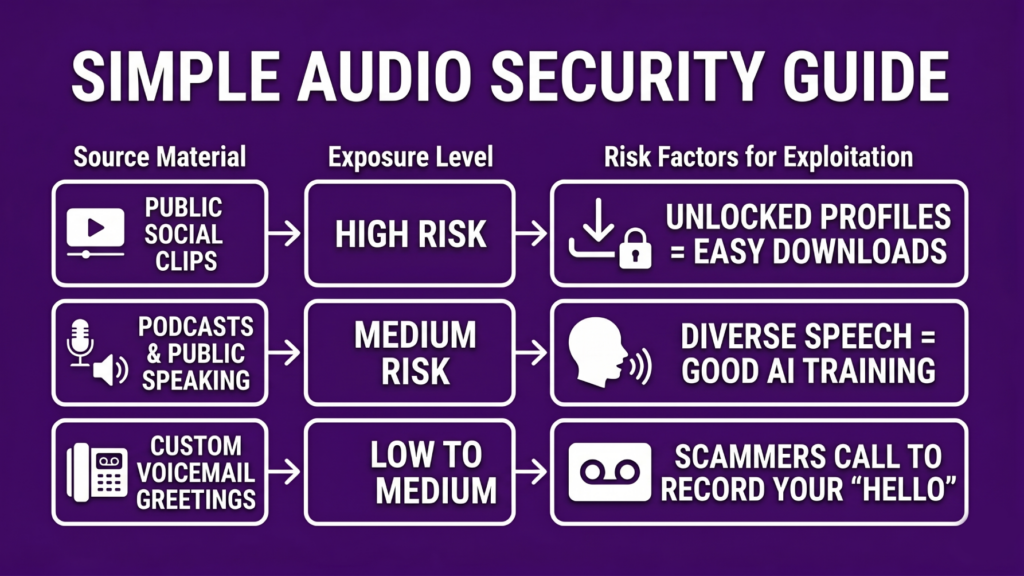
You might be wondering exactly where these digital predators find the audio samples needed to train their malicious algorithms. The unsettling truth is that most of us are willingly publishing these audio blueprints to public platforms every single day. Cybercriminals systematically harvest public data from popular platforms, targeting family vlogs, business videos, and vacation clips.
How Scammers Steal Your Voice from Social Media
Whenever a video featuring clear speech is uploaded with public privacy settings, it becomes incredibly easy for automated scraping tools to harvest that data. Furthermore, bad actors frequently cross-reference this stolen audio with personal data leaked in corporate data breaches to map out family relationships. By connecting a scraped voice sample to a specific parent or grandparent, scammers can execute highly targeted operations with terrifying precision.
AI Voice Cloning
Understanding the mechanics of AI voice cloning allows us to recognize just how easily emotional manipulation can override our logical thinking. When you hear a familiar voice crying out in agonizing distress, your brain instantly floods your system with cortisol, completely bypassing your critical thinking faculties. Scammers rely entirely on this intense biological panic to prevent you from pausing, analyzing the situation, or asking basic clarifying questions.
The Reality of Synthetic Audio: Recent cybersecurity data reveals that modern generative systems can build a highly accurate vocal clone using less than three seconds of clear audio data.
Furthermore, attackers regularly employ caller ID spoofing software to make the incoming call look like it is originating directly from your child’s or spouse’s actual smartphone. When you see a familiar name flash across your screen and simultaneously hear their exact voice sobbing on the line, verifying the reality of the situation feels almost completely unnecessary. This dangerous combination of precise biometric replication, numbers spoofing, and manufactured urgency is why these operations are succeeding at an unprecedented scale globally.
If you want to stay ahead of modern con artists, you can’t just react to the news—you need a personal playbook. That is exactly why we created our premier digital guide: “7 Things Every Adult Should Know When Navigating Online.” > Written specifically with seniors in mind, this guide strips away the condescending tech-speak and gives you the exact, actionable blueprints to protect your retirement, your identity, and your peace of mind.
Cybersecurity Tips for Seniors: The Complete 2026 Digital Defense Playbook
Anatomy of the Emergency Grandparent Scam
While these tech-driven operations can target absolutely anyone, fraudsters frequently focus their efforts on older demographics through the heartbreaking emergency grandparent scam. This calculated manipulation exploit relies heavily on a grandparent’s immediate, unconditional desire to protect their family members from harm.
Typically, the phone rings late at night or during hectic afternoon hours when the target is most likely to be caught off guard. The caller, utilizing incredibly convincing AI voice cloning, claims to be a grandchild who has been arrested, trapped in a foreign country, or hospitalized after a major accident. To ensure the victim does not investigate further, the scammer introduces a legal or medical “authority figure”—like a fake attorney or police officer—who confirms the bogus story.
Furthermore, the fraudster will desperately beg the grandparent to keep the situation an absolute secret, claiming they are too embarrassed to let their parents know. This psychological trick is deliberately designed to isolate the victim and prevent them from making a quick, clarifying phone call to the child’s actual parents. Before the victim can process the emotional shock, they are pressured into sending thousands of dollars via untraceable payment methods, such as wire transfers, cryptocurrency, or retail gift cards.
Building Your Family Firewall: A Step-by-Step Guide
Fortunately, you can completely neutralize this high-tech manipulation by establishing a proactive defense system known as a family firewall. Just as digital firewalls protect computer networks from unauthorized intrusions, a personal communication protocol protects your household from psychological exploitation. By setting up clear verification rules before an emergency ever happens, you can ensure that your family remains completely unshakeable in the face of a crisis.
Building Your Family Firewall: A Step-by-Step Guide
Step 1: Establish a Secret Family Code Word
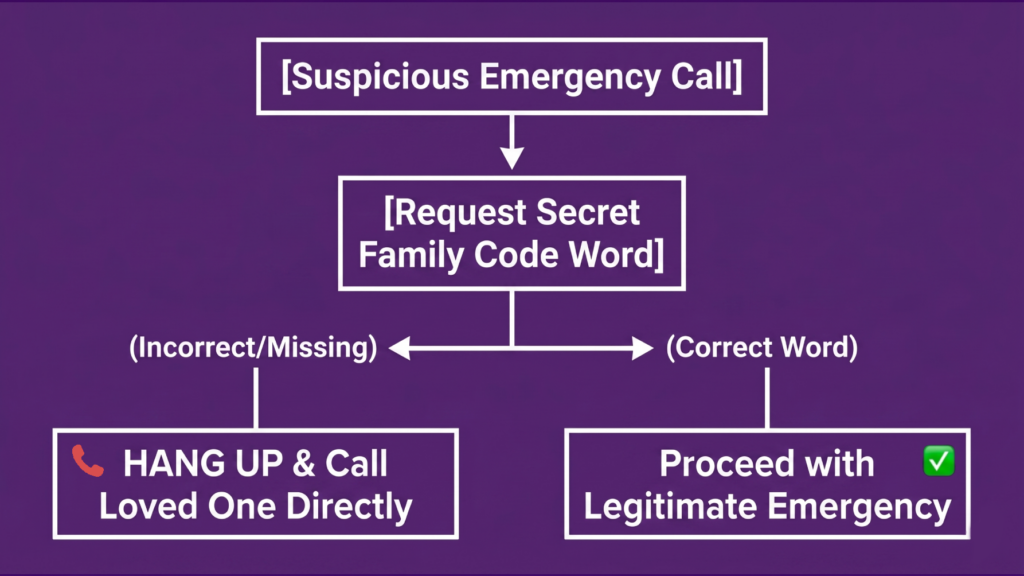
Your absolute best line of defense against synthetic audio deception is a highly secure, memorable family code word. This word or short phrase must be kept completely private within your immediate household, and it should never be shared online, written in emails, or used as a standard password.
Choose a unique phrase: Avoid obvious choices like your street name, a pet’s name, or a common hobby that someone could easily discover by browsing your public social media profiles.
Keep it memorable: Select a random, funny combination of words or an inside joke from a family vacation that every member can instantly recall under intense pressure.
Define the rules: Agree that if anyone calls claiming to be in danger or demanding money, they must state the secret word immediately to verify their identity.
Step 2: Implement the “Hang Up and Call Back” Rule
If you ever receive an urgent, emotionally distressing call from a loved one asking for financial assistance, you must learn to override your initial panic. Make it a strict household policy to immediately hang up the phone, take a deep breath, and call that specific person back using their verified phone number stored in your contact list. Even if the incoming caller ID matches their name perfectly, hanging up breaks the scammer’s digital connection and allows you to establish a secure line directly to the real individual.
Step 3: Audit and Lock Down Your Digital Footprint
Since modern voice synthesis programs require real audio samples to function, reducing the availability of your vocal data is a massive win for your security.
Switch to private profiles: Change all personal social media accounts from public to private, ensuring that only trusted friends can view your videos.
Review past uploads: Remove or archive old videos that feature clear, uninterrupted speech from your children or elderly relatives.
Be cautious with strangers: Avoid answering calls from unknown numbers, and if you do pick up, never say the word “yes” or provide extended speech samples to automated robocalls.
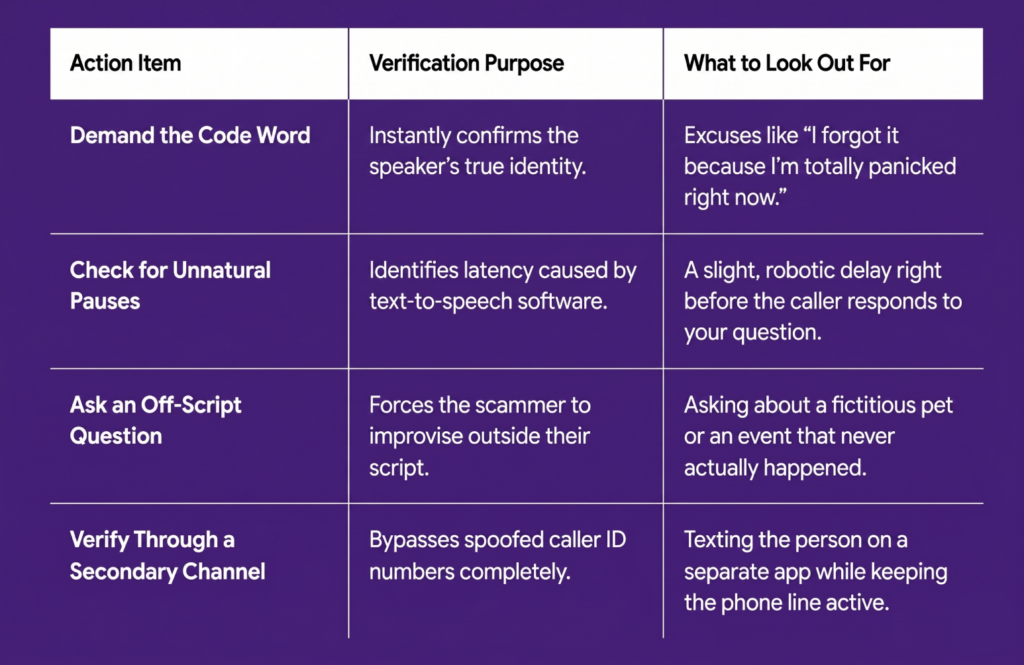
Practical Checklist for Verifying Urgent Requests
To help your household stay grounded during a high-stress scenario, print out or share this simple verification checklist with your family members:
Practical Checklist for Verifying Urgent Requests
Staying Ahead of the Digital Curve
As generative technology continues to advance at a breakneck pace, the line between reality and digital fabrication will undoubtedly become even thinner. However, staying safe does not mean living in a state of constant paranoia or completely abandoning the convenience of modern social media. By simply understanding the technical mechanics of AI voice cloning and implementing a robust family firewall, you can easily outsmart even the most sophisticated digital predators.
Remember that awareness is your ultimate superpower in this rapidly evolving digital landscape. Talk to your parents, sit down with your kids, and establish your secret verification protocols today before a fraudster ever gets the chance to call. If you found this guide helpful, share it with your friends and neighbors to help build a safer, more resilient community against modern synthetic scams.